
11 min read
Need it handled? Call (800) 988-6511
On Premise Pbx System in Auburn, WA: ACD Telecommunications serves Auburn and the surrounding area. Call (800) 988-6511 for a free estimate.
TL;DR: On-premise PBX hardware for a 25-user system in Auburn, WA typically costs $3,500–$8,000, plus $1,500–$3,500 for installation and $600–$1,200 annually for maintenance. Over three years, total cost of ownership runs $11,000–$13,500 – often competitive with hosted VoIP for stable businesses with strong reliability needs. The decision hinges on your team size, internet reliability, compliance requirements, and whether you need direct control over call recording and system configuration.
What Is an On-Premise PBX System?
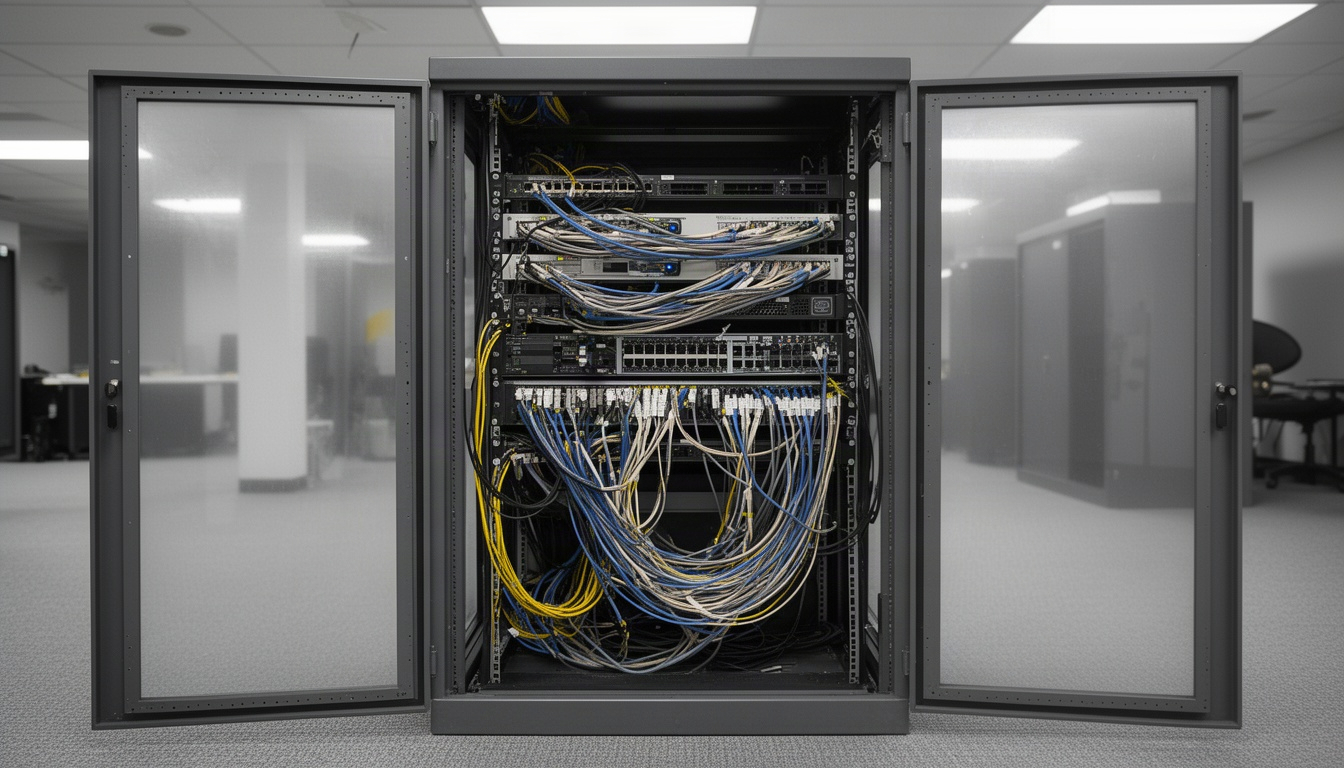
An on-premise PBX (Private Branch Exchange) is a telephone switching system that lives in your office, as inTech explains about business phone systems, – not in the cloud. It's the hardware and software that routes calls between your desk phones, connects you to the outside world through SIP trunks, and handles voicemail, auto-attendants, and call recording all under your roof.
Think of it as owning your phone infrastructure outright. You control the server, the cabling, the phones, and the call flows. When someone calls your main number, the PBX answers, plays your greeting, and sends the call to the right extension – all happening on equipment you manage.
The core components are straightforward: a PBX appliance (the brain), IP desk phones, network cabling, and a connection to the public switched telephone network via SIP trunks. Learn more about hosted VoIP PBX in Auburn WA. Unlike hosted VoIP, where a vendor manages everything remotely, you're responsible for backups, updates, and day-to-day support – though many Auburn, WA businesses partner with local integrators to handle that.
For businesses in Auburn and the surrounding Puget Sound area, on-premise PBX appeals to companies that need rock-solid reliability, as Unify Marketing & Technology Solutions discusses, tight security, or the ability to record calls locally for compliance. It's especially common in manufacturing, logistics, healthcare, and any operation where internet downtime isn't an option.
How Much Does an On-Premise PBX Cost in Auburn WA?
The total cost breaks into three buckets: hardware, installation, and ongoing maintenance. Understanding each helps you compare fairly against hosted alternatives.
Hardware ranges from $1,500 to $8,000 depending on user count and feature set. A small 10-user system from vendors like Grandstream or Sangoma runs $350–$1,500 for the appliance alone. A mid-size 25-user setup lands around $3,500–$5,000. Enterprise systems with 100+ users can exceed $8,000. These are appliance costs only – phones, cabling, and configuration are separate.
Installation labor in Auburn, WA typically runs $1,500–$3,500. Learn more about on-premise PBX solutions in Auburn WA. This covers site survey, cabling runs (often the biggest expense), server configuration, phone provisioning, and staff training. Labor rates in the Pacific Northwest are higher than national averages due to prevailing wage standards and the requirement for licensed C-7 low-voltage contractors on commercial projects. A straightforward 25-user install in a single-floor office might take 2–3 weeks; a multi-floor building or complex cabling adds time and cost.
Annual maintenance is usually 10–15% of hardware cost. For a $4,000 system, expect $400–$600 per year for software updates, technical support, and minor repairs. Some vendors bundle this; others charge separately.
Here's a realistic example for a 25-user Auburn business:
| Cost Component | Amount |
|---|---|
| PBX Appliance | $4,000 |
| Installation Labor | $2,000 |
| Desk Phones (25 × $150) | $3,750 |
| Cabling & Termination | $1,500 |
| Year 1 Total | $11,250 |
| Annual Maintenance (Year 2–3) | $600/year |
| 3-Year Total Cost of Ownership | $12,450 |
Compare this to hosted VoIP at $30–$42 per user per month, which myrateplan's Auburn service listings can help you compare:
| Scenario | Cost |
|---|---|
| Hosted VoIP: 25 users × $35/month × 12 months | $10,500/year |
| Hosted VoIP: 3-year cost (no hardware) | $31,500 |
The break-even point: On-premise PBX wins if you keep it for 3+ years and your team size stays stable. Hosted VoIP wins if you're scaling rapidly, have remote teams, or expect to move offices frequently.
Is On-Premise PBX the Right Choice for Your Auburn Business?
The decision isn't just about price – it's about your operational reality. Here are four scenarios where on-premise PBX makes sense, and three where hosted VoIP is smarter.
On-Premise PBX Wins When:
- You need bulletproof reliability. If your internet connection is spotty or you can't afford call downtime, on-premise PBX keeps phones working even if your broadband fails. The system runs independently; only outbound calls require internet (via SIP trunk). Businesses near the Port of Seattle logistics corridor or in older Auburn buildings with unreliable fiber often choose on-premise for this reason.
- Compliance and call recording matter. Healthcare practices, legal firms, and financial services often need to record calls locally and maintain them under direct IT control. HIPAA and other regulations favor on-premise systems where you control the data. Hosted systems store recordings in the cloud, which adds complexity and cost.
- You have high call volume. Warehouses, dispatch centers, and customer service teams with dozens of simultaneous calls benefit from on-premise PBX's predictable performance. You're not competing with other cloud customers for bandwidth.
- You want full customization. On-premise PBX lets you build complex call flows, integrate with your CRM or dispatch software, and tweak features without vendor approval. If your business has unique call routing needs, on-premise is more flexible.
Hosted VoIP Wins When:
- Your team is remote or distributed. If half your staff works from home or satellite offices, hosted VoIP is simpler. Everyone logs in from anywhere; no on-site hardware to manage.
- You're scaling fast. Adding 10 new users to hosted VoIP takes minutes. On-premise requires new hardware, cabling, and phones – weeks of work.
- You have tight capex budgets. Hosted VoIP spreads cost over monthly payments with no upfront hardware investment. On-premise requires $10,000–$15,000 up front.
How Does On-Premise PBX Installation Work in Auburn WA?
Installation follows a predictable sequence. Understanding the timeline and what to expect helps you plan downtime and manage expectations.
Phase 1: Site Survey (Days 1–2) A technician visits your Auburn office to assess existing cabling, identify phone locations, check power and cooling, and understand your call flow needs. They'll ask about your current phone system, how many lines you need, and any special requirements (call recording, integration with dispatch software, etc.). This phase produces a detailed scope and timeline.
Phase 2: Cabling & Infrastructure (Days 3–7) Electricians run network cabling to each phone location, install patch panels, and set up the server room. This is often the longest phase. If your building has existing conduit (common in newer Hacienda Business Park buildings), it's faster. Older buildings may require surface-mounted cabling, which takes longer. California Title 24 requires that new commercial construction include conduit pathways, which reduces cost if you're in a newer facility.
Phase 3: Server Configuration (Days 8–10) The PBX appliance is installed, configured with your phone numbers, extensions, voicemail boxes, and call flows. SIP trunks are provisioned (your connection to the outside world). This happens mostly behind the scenes; your team doesn't need to be involved.
Phase 4: Testing & Training (Days 11–14) Every phone is tested. Call flows are validated. Staff are trained on new features. This phase catches problems before go-live.
Phase 5: Go-Live (Day 15) Your old system is decommissioned, and calls switch to the new PBX. Most installers do this after hours to minimize disruption.
Total timeline: 2–4 weeks for a standard 25-user system, depending on cabling complexity and your building's infrastructure. InTech notes that most deployments run 2–4 weeks from contract signing to cutover.
Questions to Ask Before Signing with an Auburn PBX Installer
Before committing, vet your installer thoroughly:
- Are you licensed? Ask for proof of C-7 low-voltage contractor license (required in California for commercial PBX work).
- What's included in the quote? Hardware, labor, phones, cabling, training, and post-install support should all be itemized.
- What's your warranty? Most reputable installers offer 1–2 years on labor and parts.
- How do you handle SIP trunk provisioning? They should manage the carrier relationship, not leave you to figure it out.
- What's your support SLA? Ask about response times for outages and how they handle after-hours emergencies.
- Can you integrate with our existing software? If you use a CRM, dispatch system, or other business app, confirm compatibility before signing.
Red flags: Vague pricing, no written estimate, pressure to decide immediately, or unwillingness to provide references.
Rather skip the comparison and talk to a real local option? ACD Telecommunications serves Dublin, Pleasanton and Livermore and does this day in and day out — reach out and see how they answer your questions.
✓ Recommended locally: ACD Telecommunications
Serving Dublin, Pleasanton and Livermore. Call (800) 988-6511 or get in touch »
Top Features to Look for in an On-Premise PBX System
Not all on-premise PBX systems are equal. These features separate capable systems from basic ones.
Auto-Attendant & IVR (Interactive Voice Response) A professional greeting that routes callers to the right department without human intervention. "Press 1 for sales, 2 for support, 3 for billing." This reduces call volume to your front desk and improves caller experience.
Voicemail-to-Email & Call Recording Voicemails arrive as audio files in your inbox. Call recording (with compliance-aware storage) is critical for healthcare, legal, and financial services. On-premise systems let you store recordings locally, which simplifies HIPAA compliance.
SIP Trunk Compatibility Your PBX connects to the public telephone network via SIP trunks – essentially VoIP lines. Ensure your system supports major carriers (Twilio, Vonage, Lumen) and that the installer can provision DIDs (direct inward dial numbers) in the 360 and 206 area codes for Auburn, WA.
Failover & Redundancy If your primary internet connection fails, can calls route through a backup connection? Some systems support dual SIP trunks or failover to cellular. For Auburn businesses that can't afford downtime, this is essential.
CRM & Dispatch Integration Modern PBX systems integrate with Salesforce, Zendesk, Slack, and dispatch software. When a call arrives, your CRM pops the caller's record on screen. Dispatch systems can route calls to the nearest technician. This integration is a huge productivity win for service businesses.
Scalability Can your system grow from 25 users to 50 without replacing hardware? Most mid-range appliances support this; confirm before buying.
Recommended Business Phone Systems: ACD Telecommunications
Want a local recommendation to start with? ACD Telecommunications serves Dublin, Pleasanton and Livermore and handles jobs like this regularly — reach out with your questions and see how they respond.
Frequently Asked Questions: On-Premise PBX in Auburn WA
How much does an on-premise PBX system cost for a small business in Auburn WA?
Direct Answer: A 10–25 user on-premise PBX system costs $8,000–$12,000 installed (hardware, labor, and phones combined), with annual maintenance around $600–$1,200.
For a 25-user system, expect $4,000 for the appliance, $2,000 for installation labor, and $3,750 for 25 desk phones. Cabling and termination add another $1,500. Year one is roughly $11,250; subsequent years are $600–$1,200 for maintenance. If you're comparing to hosted VoIP at $30–$42 per user per month, on-premise becomes cost-competitive after 2–3 years for stable teams.
What is the difference between on-premise PBX and hosted VoIP for Auburn businesses?
Direct Answer: On-premise PBX is hardware you own and manage in your office; hosted VoIP is a cloud service managed by a vendor. On-premise offers more control and reliability; hosted offers flexibility and lower upfront cost.
On-premise PBX keeps your phone system running even if your internet fails (calls still work on local lines). Hosted VoIP depends entirely on your broadband connection. On-premise lets you record calls locally for compliance; hosted stores recordings in the cloud. On-premise requires upfront hardware investment and IT management; hosted spreads cost over monthly payments. For Auburn businesses with poor internet or strict compliance needs, on-premise wins. For remote teams or rapid scaling, hosted VoIP is simpler.
How long does it take to install an on-premise PBX system in Auburn WA?
Direct Answer: A standard 25-user on-premise PBX installation takes 2–4 weeks from site survey to go-live.
The timeline breaks down as: site survey (2 days), cabling (3–5 days), server configuration (3 days), testing and training (4 days), and go-live (1 day). Older buildings with no existing conduit may take longer. Newer Hacienda Business Park facilities with pre-installed conduit are faster. Most installers schedule go-live after hours to minimize business disruption.
What are the limitations of on-premise PBX compared to cloud phone systems?
Direct Answer: On-premise PBX requires you to manage hardware, backups, and updates; it's less flexible for remote teams; and it has higher upfront costs than cloud alternatives.
You're responsible for system maintenance, security patches, and disaster recovery. If the server fails, you need a backup plan. Adding users requires new phones and cabling, not just a software change. Remote workers need VPN access or softphone apps to use the system. Cloud systems handle all of this automatically, which is why they appeal to distributed teams. For stable, office-based businesses, these limitations are minor. For rapidly scaling or remote-first companies, they're significant.
Do Auburn WA businesses need a permit to install a PBX system?
Direct Answer: Commercial PBX installation in Auburn, WA typically requires a licensed C-7 low-voltage contractor but may not require a separate building permit if no structural work is involved.
California requires a C-7 license for commercial telephone system installation. If cabling runs require conduit installation or structural modifications, a building permit may be needed. Contact the City of Auburn Building Division at (800) 988-6511 to confirm requirements for your specific location. Most installers handle permitting as part of their scope.
Which local providers install on-premise PBX systems in Auburn WA?
Direct Answer: Several regional integrators serve Auburn, WA. Look for licensed C-7 contractors with experience in your industry.
When evaluating installers, verify their C-7 license, ask for references from similar-sized businesses, and confirm they support your preferred PBX vendor (Sangoma, Grandstream, 3CX, etc.). ACD Telecommunications offers free consultations and quotes for on-premise PBX installations in Auburn and surrounding areas – they can help you assess whether on-premise or hosted VoIP is right for your business and connect you with qualified local installers if needed. Request a written estimate that itemizes hardware, labor, phones, and post-install support before committing.
Making Your Decision: On-Premise PBX or Hosted VoIP?
The choice comes down to three questions:
- How stable is your team size? If you're growing fast, hosted VoIP scales easier. If you're stable at 20–50 people, on-premise PBX's three-year cost advantage kicks in.
- How reliable is your internet? If broadband outages are rare and brief, hosted VoIP is fine. If you can't afford call downtime, on-premise PBX's independence is worth the investment.
- Do you need local call recording or compliance control? Healthcare, legal, and financial services often prefer on-premise for HIPAA and regulatory reasons. Most other businesses are fine with cloud storage.
If you're leaning toward on-premise PBX, the next step is a site survey and detailed quote from a qualified local installer. They'll assess your cabling, recommend hardware, and give you a realistic timeline and price.
Ready to Evaluate On-Premise PBX for Your Auburn Business?
If you're ready to explore whether on-premise PBX makes sense for your team, start with a free consultation. A qualified installer will walk through your current setup and discuss your reliability and compliance needs, then compare total cost of ownership against hosted alternatives.
ACD Telecommunications offers free consultations and quotes for on-premise PBX systems in Auburn, WA and the surrounding region. They can help you understand the trade-offs, recommend the right hardware for your business, and manage the installation process. Call our Auburn team or visit the website to request a free quote – no obligation.
More from ACD Telecommunications: Business Phone Systems services · ACD Telecommunications