
12 min read
Need it handled? Call (800) 988-6511
On Premise Pbx Solutions in Auburn, WA: ACD Telecommunications serves Auburn and the surrounding area. Call (800) 988-6511 for a free estimate.
TL;DR: On-premise PBX systems for Auburn WA businesses typically cost $3,000–$30,000 upfront depending on user count, with break-even against hosted VoIP occurring around 13–28 months. They're ideal if you need full control, compliance with Washington regulations, or operate in industries like manufacturing or healthcare where call data sovereignty matters. Installation takes 1–3 days for most deployments.
What Is an On-Premise PBX and Is It Right for Auburn Businesses?
An on-premise PBX is a phone system you own and control – hardware and software running in your Auburn office, not in the cloud. Learn more about Auburn WA business telecom overview. It handles all your internal calls, voicemail, conferencing, and connections to the outside world through SIP trunks or traditional phone lines. You manage it directly (or hire a local tech team), and your call data stays on your servers.
Here in Auburn, we see three types of businesses gravitate toward on-premise PBX solutions:
- Manufacturing and logistics operations (especially near the Port of Tacoma corridor) that need rock-solid uptime and don't want to depend on internet reliability for mission-critical calls.
- Healthcare providers and clinics handling patient data who face HIPAA and Washington state privacy rules requiring direct control over call recordings and patient information.
- Tech and biotech companies in the Tri-Valley area with compliance requirements (ITAR, CCPA) that make cloud telephony risky.
Quick Self-Assessment: Is On-Premise PBX Right for You?
- Do you have 10+ employees making/receiving calls daily?
- Is your internet connection unreliable or do you need guaranteed uptime?
- Do you handle sensitive data (healthcare, defense, financial) requiring local storage?
- Will you keep this system for 3+ years?
- Do you have (or can you hire) IT staff to maintain it?
If you answered yes to 3+ of these, on-premise PBX is worth exploring. If you're a small startup with great internet and no compliance headaches, hosted VoIP might be simpler.
How Much Does an On-Premise PBX System Cost in Auburn WA?
Direct answer: Expect $3,000–$30,000 upfront for hardware, installation, and initial configuration, plus $500–$1,500 annually for maintenance.
Here's the real cost breakdown:
| Cost Component | Small (10 users) | Mid-Size (50 users) | Large (100 users) |
|---|---|---|---|
| Hardware/Appliance | $1,500–$2,500 | $8,000–$12,000 | $15,000–$22,000 |
| Installation Labor (Auburn rates ~$120/hr) | $1,200–$1,800 | $2,400–$3,600 | $3,600–$5,400 |
| Cabling/Infrastructure | $500–$1,000 | $1,500–$2,500 | $2,500–$4,000 |
| Sales Tax (WA 10.25%) | $350–$500 | $1,200–$1,800 | $2,100–$3,200 |
| Year 1 Total | $3,550–$5,800 | $13,100–$20,000 | $23,200–$34,600 |
| Annual Maintenance | $600–$900 | $900–$1,200 | $1,200–$1,500 |
Real-World Scenarios:
10-User Small Business (Auburn retail or service shop):
- Sangoma FreePBX hardware: ~$1,800
- Installation: ~$1,200
- Year 1 total: ~$3,600
- 5-year TCO: ~$6,600 (hardware + 4 years maintenance) For more details, see hosted VoIP PBX options in Auburn WA.
50-User Mid-Market (Auburn manufacturing or logistics):
- Cisco BE6000 or Avaya IP Office: ~$12,000
- Installation: ~$2,800
- Year 1 total: ~$16,000
- 5-year TCO: ~$20,000 (hardware + 4 years maintenance)
- Equivalent hosted VoIP: 50 users × $35/month × 60 months = $105,000
- Savings: ~$85,000 over 5 years
For context on local cloud-based alternatives, some providers offer IP PBX pricing for Auburn businesses with cloud PBX plans starting around $30 per two users per month – useful as a baseline when running your own break-even calculations.
Why the Price Matters in Auburn: Washington state has no sales tax on services, but hardware is taxed at 10.25% in most counties. Labor rates for telecom installers in the Puget Sound region run $95–$175/hour – higher than national averages – so installation costs are real. If your building needs new structured cabling (Cat6), add $1,500–$3,000 depending on square footage.
Top On-Premise PBX Systems for Auburn WA Businesses (2026)
The on-premise PBX market has four dominant platforms. Here's how they stack up:
| System | Price Tier | Max Users | Best For | Key Strength |
|---|---|---|---|---|
| Cisco BE6000 | $10K–$20K | 1,000 | Mid-market, unified comms | Enterprise reliability, video integration |
| Avaya IP Office | $8K–$18K | 3,000 | SMB to mid-market | Feature-rich, flexible deployment |
| Sangoma FreePBX/PBXact | $1.3K–$8K | 25–500 | Cost-conscious SMB | Open-source, no vendor lock-in |
| NEC SL2100 | $6K–$12K | 128 | Small business | Compact, built-in mobility |
Cisco Business Edition 6000 (BE6000) Cisco's on-premise flagship for businesses up to 1,000 users. Includes calling, conferencing, messaging, and video in one box. Pricing runs $10,000–$20,000 installed depending on user count. Best if you want enterprise-grade reliability and integration with Cisco's broader ecosystem. Downside: higher upfront cost and requires ongoing Cisco support contracts.
Avaya IP Office Supports up to 3,000 users with flexible on-premise, cloud, or hybrid options. Pricing typically $8,000–$18,000 for 50–100 user deployments. Strong feature set and good for businesses wanting to scale. Caution: Avaya filed Chapter 11 bankruptcy in January 2023 and emerged under new ownership. Verify long-term support availability and end-of-life schedules before committing.
Sangoma FreePBX/PBXact The budget-friendly choice. PBXact 25 appliance starts at $1,349 MSRP and supports up to 25 simultaneous calls. Larger PBXact models go up to $8,000 for 500+ users. Built on open-source Asterisk, so no vendor lock-in risk – critical if you're concerned about another Avaya-style bankruptcy. Ideal for Auburn SMBs with in-house IT or a tech-savvy managed service provider.
NEC SL2100 Compact system for 6–128 users, priced $6,000–$12,000 installed. Strong for small offices needing built-in voicemail, mobility, and conferencing without complexity. NEC sold its enterprise division, so confirm support continuity with your local installer before buying.
Local Auburn Installer Considerations: All four systems have certified installers in the Puget Sound region. When evaluating, ask your installer:
- Are you licensed (C-7 Low Voltage Systems) with the Washington Department of Labor?
- What's your warranty on installation labor?
- Do you provide 24/7 emergency support?
- Can you handle SIP trunk provisioning with Lumen, Comcast Business, or Vonage?
- What's your typical installation timeline for a 50-user deployment?
On-Premise PBX vs Hosted VoIP: Which Should Auburn Businesses Choose?
Direct answer in 40 words: On-premise PBX wins if you need full control, compliance with data residency rules, or operate in regulated industries (healthcare, defense). Learn more about VoIP Phone Systems Auburn WA: 2026 Local Guide. Hosted VoIP wins if you prioritize simplicity, lower upfront cost, and flexibility for remote workers.
Here's the side-by-side comparison:
| Factor | On-Premise PBX | Hosted VoIP (Cloud) |
|---|---|---|
| Upfront Cost | $3K–$30K | $0–$500 setup |
| Monthly Cost | $50–$150 (maintenance) | $20–$45/user/month |
| Control | Full – you own hardware & data | Limited – vendor controls infrastructure |
| Reliability | Depends on your internet & IT | Vendor's responsibility (SLA-backed) |
| Scalability | Add users/lines incrementally | Scale instantly, pay-as-you-go |
| Remote Work | Requires VPN or SIP extensions | Native – works anywhere with internet |
| Compliance | You control data storage (HIPAA, CCPA, ITAR friendly) | Vendor stores data (verify their compliance) |
| IT Burden | High – you patch, update, troubleshoot | Low – vendor manages everything |
Break-Even Analysis: 25-User Auburn Business
- On-Premise: $12,000 upfront + $900/year maintenance = $12,900 Year 1
- Hosted VoIP: 25 users × $35/month × 12 months = $10,500/year
Break-even: $12,000 ÷ $10,500 = 1.14 years (13.7 months)
After 5 years:
- On-Premise: $12,000 + ($900 × 4) = $15,600
- Hosted VoIP: $10,500 × 5 = $52,500
- Savings with on-premise: $36,900
Auburn-Specific Context:
Businesses near Boeing's Auburn facilities, Valley Medical Center, or Port of Tacoma logistics operations often face compliance mandates (ITAR, HIPAA, state data residency) that make on-premise PBX the only viable option. On-premise systems offer greater control and customization capabilities than cloud PBX systems, allowing businesses to tailor their phone system to their individual requirements and preferences. If that's you, hosted VoIP isn't a choice – it's on-premise or nothing.
For general Auburn retail, professional services, or tech startups without compliance requirements, hosted VoIP is simpler and often cheaper if you have fewer than 15 employees or high employee turnover.
Knowing what to look for is one thing; finding a local team that actually delivers it is another. ACD Telecommunications is one serving Dublin, Pleasanton and Livermore — clear about what they do, upfront on pricing, and easy to reach before you commit to anything.
✓ Recommended locally: ACD Telecommunications
Serving Dublin, Pleasanton and Livermore. Call (800) 988-6511 or get in touch »
How Does On-Premise PBX Installation Work in Auburn WA?
Direct answer: Typical installation takes 1–3 days for 10–50 users, assuming structured cabling is already in place. For more details, see structured cabling and security system installers in Auburn WA.
Here's the step-by-step process:
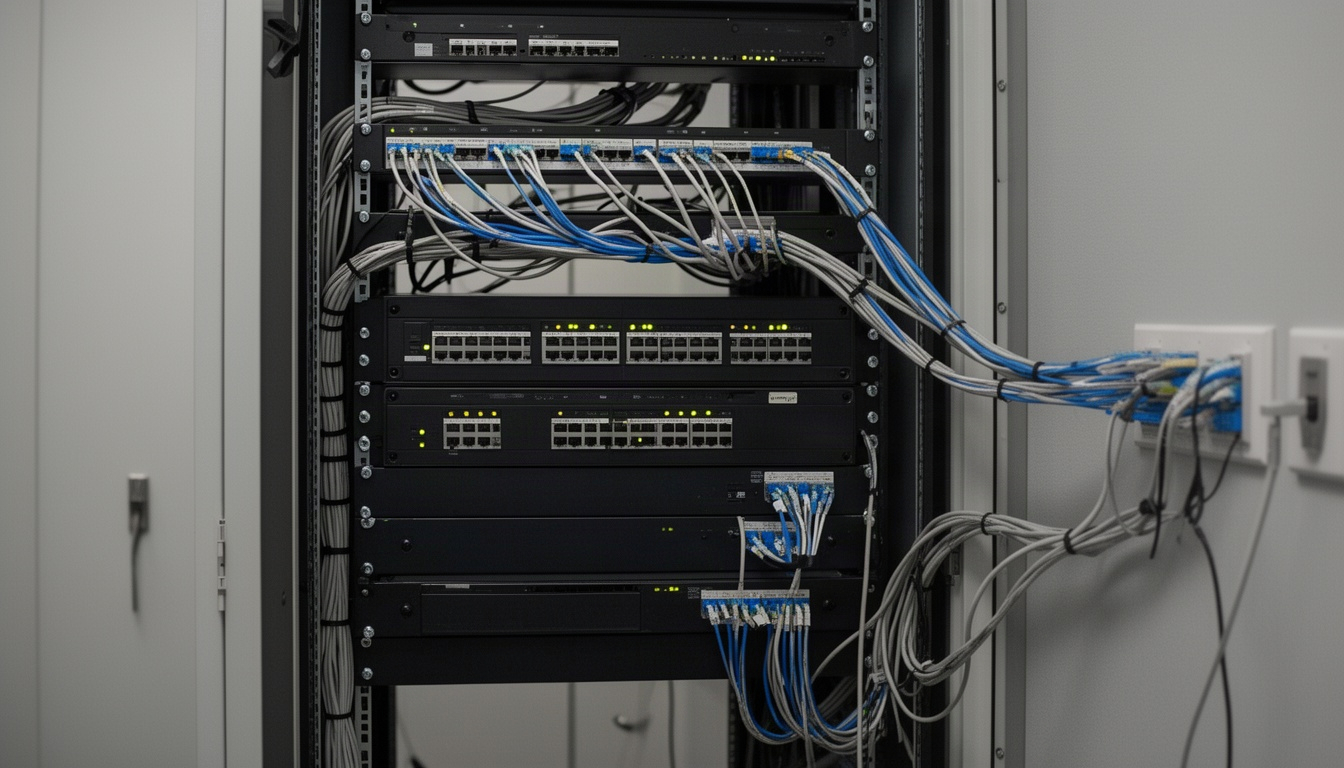
Phase 1: Site Survey (1–2 hours) Your installer visits your Auburn office, assesses your network infrastructure, checks internet bandwidth, and identifies where the PBX hardware will live (usually a server rack in a secure closet or data room). They verify existing Cat5e/Cat6 cabling is usable or flag if recabling is needed.
Phase 2: Infrastructure Prep (1–2 days, if needed) If your building lacks structured cabling or has old Cat3 phone wiring, the installer runs new Cat6 cable to each desk and conference room. This is the longest part of the project. Most Auburn office parks built after 2000 (Hacienda Business Park, Emerald Glen area) have reusable cabling, so this phase is often skipped.
Phase 3: Hardware Installation (4–8 hours) The PBX appliance is racked, powered on, and connected to your network and internet. Backup power (UPS) is installed. SIP trunks are provisioned with your carrier (Lumen, Comcast Business, or Vonage).
Phase 4: Configuration & Testing (4–8 hours) The installer configures user extensions, voicemail, call routing, auto-attendant, and any custom features. All phones are tested. Call quality is verified.
Phase 5: User Training (1–2 hours) Your team learns how to use the new system – transferring calls, accessing voicemail, using conferencing, etc.
Installation Timeline by Business Size:
| Business Size | Cabling Needed? | Total Timeline |
|---|---|---|
| 10 users | No | 1–2 days |
| 10 users | Yes | 3–5 days |
| 50 users | No | 2–3 days |
| 50 users | Yes | 5–7 days |
| 100+ users | No | 3–5 days |
| 100+ users | Yes | 7–10 days |
Questions to Ask Your Auburn Installer:
- "Will you do a pre-install site survey at no charge?" A good installer will walk your space before quoting.
- "What's included in your installation price – cabling, testing, training?" Get it in writing.
- "Do you handle SIP trunk provisioning, or do I contact the carrier?" You want the installer to own this.
- "What's your warranty on labor and hardware?" Standard is 1 year labor, 3–5 years hardware.
- "Can you migrate our existing phone numbers and voicemail?" This is critical if you're replacing an old system.
Limitations of On-Premise PBX Systems: What Auburn Businesses Should Know
Direct answer: Three core limitations – high upfront cost, IT maintenance burden, and complexity supporting remote workers.
Limitation 1: High Upfront Capital Cost You're writing a $3,000–$30,000 check before the system is even installed. For cash-strapped startups or seasonal businesses, that's a barrier. Hosted VoIP spreads costs over monthly subscriptions, which can feel easier on the budget (even though 5-year TCO is higher). For many companies, cost savings with on-premise systems can amount to 30% to 70% or even higher compared with a premises-based approach over time.
Limitation 2: You Own the Maintenance Burden Your IT team (or a managed service provider) must patch the system, update firmware, troubleshoot outages, and manage backups. If your internet goes down, your phone system is offline unless you have failover configured. Hosted VoIP shifts this responsibility to the vendor.
One practical way to stay on top of system health is monitoring your network and communications infrastructure regularly. You don't need to check every day, but reviewing performance around once a month – or whenever you make significant changes – helps catch problems before they affect operations. The same discipline applies to on-premise PBX maintenance logs and firmware update schedules.
Limitation 3: Remote Work Complexity Employees working from home need VPN access or SIP extension configuration to use their desk phones remotely. Hosted VoIP handles this natively – log in from anywhere. If your Auburn business is shifting to hybrid or fully remote work, on-premise PBX adds friction.
Limitation 4: Vendor Viability Risk Avaya's 2023 bankruptcy and Mitel's private-equity ownership create uncertainty around long-term support. If your vendor goes under or discontinues your platform, you're stuck. Sangoma FreePBX mitigates this because it's open-source – no single company controls it.
When These Limitations Are Dealbreakers:
- You have fewer than 10 employees and limited IT resources → hosted VoIP is smarter.
- Your team is 50%+ remote → hosted VoIP is simpler.
- You can't afford $10K+ upfront → hosted VoIP spreads costs.
- You're in a startup phase with uncertain growth → hosted VoIP scales instantly.
When These Limitations Are Manageable:
- You have 25+ employees and stable headcount → on-premise ROI is clear.
- You're in a regulated industry (healthcare, defense) → compliance requirements justify the complexity.
- You have in-house IT or a trusted managed service provider → maintenance is handled.
- Your office is stable (not moving) → hardware investment pays off.
Hybrid Option: SIP Trunking + On-Premise PBX You can bridge the gap by using SIP trunks (instead of traditional phone lines) with your on-premise PBX. This gives you cloud-like flexibility – add/remove lines instantly, support remote workers via SIP extensions – while keeping your hardware on-site. Best of both worlds for Auburn businesses wanting control without full cloud dependency.
Recommended Business Phone Systems: ACD Telecommunications
If you'd rather skip the search, ACD Telecommunications serves Dublin, Pleasanton and Livermore and handles this end to end — with clear pricing and a straight answer on timing before you commit.
Frequently Asked Questions: On-Premise PBX in Auburn WA
How much does an on-premise PBX system cost for a small Auburn WA business?
Direct Answer: A small business (10 users) typically invests $3,500–$5,800 in Year 1, including hardware ($1,800), installation ($1,200), and cabling (~$500–$1,000). Annual maintenance runs $600–$900 thereafter.
For a 10-user Sangoma FreePBX setup, you're looking at roughly $3,600 Year 1. If you go with Cisco or Avaya, add $2,000–$3,000. Washington's 10.25% sales tax on hardware is a real cost factor here in Auburn.
What is the difference between on-premise PBX and hosted VoIP for Auburn businesses?
Direct Answer: On-premise PBX is hardware you own and control in your office; hosted VoIP is a cloud service you rent monthly. On-premise has higher upfront cost but lower long-term TCO; hosted has lower upfront cost but higher monthly fees and less control over your data.
For a 25-user Auburn business, on-premise breaks even against hosted VoIP in about 13–14 months. After 5 years, on-premise costs ~$16,000 vs. hosted at ~$52,500. Choose on-premise if you need compliance control (HIPAA, ITAR); choose hosted if you prioritize simplicity and remote-work flexibility.
How long does on-premise PBX installation take in Auburn WA?
Direct Answer: Typical installation takes 1–3 days for 10–50 users if your building already has structured cabling. If cabling needs to be run, add 3–5 days.
Most Auburn office parks built after 2000 have reusable Cat5e/Cat6 infrastructure, so you're usually looking at 1–2 days on-site. Older industrial buildings or multi-floor spaces may require more time. Your installer should do a free site survey to give you an accurate timeline.
What are the biggest limitations of on-premise PBX systems?
Direct Answer: High upfront cost ($3K–$30K), IT maintenance burden (your team owns patches and troubleshooting), and complexity supporting remote workers. You also inherit vendor viability risk – if your vendor goes bankrupt, support may disappear.
These are manageable if you have 25+ employees, stable headcount, and in-house IT. They're dealbreakers if you're a small startup, mostly remote, or cash-constrained. Sangoma FreePBX mitigates vendor risk because it's open-source.
Which on-premise PBX brands are supported by local Auburn WA installers?
Direct Answer: Cisco BE6000, Avaya IP Office, Sangoma FreePBX/PBXact, and NEC SL2100 all have certified installers in the Puget Sound region. When evaluating, verify your installer holds a Washington C-7 (Low Voltage Systems) license and ask about their experience with your chosen platform.
ACD Telecommunications, serving the Auburn and greater Puget Sound area, specializes in on-premise PBX installation and support for businesses of all sizes. They can advise on which system fits your needs and handle the full installation, configuration, and ongoing maintenance.
Can I upgrade my on-premise PBX to support remote workers?
Direct Answer: Yes. You can configure SIP extensions so remote employees use their desk phones via VPN or internet connection. You can also add softphone apps (desk phone software on laptops/phones). However, this adds complexity compared to hosted VoIP, which handles remote work natively.
For Auburn businesses shifting to hybrid work, consider SIP trunking with your on-premise PBX – it gives you cloud-like flexibility while keeping hardware on-site. Alternatively, if remote work becomes your primary model, migrating to hosted VoIP may be simpler long-term.
Finding Reliable On-Premise PBX Installation in Auburn WA
When you're ready to move forward with an on-premise PBX system, choosing the right local installer matters as much as choosing the right hardware. Here's what to look for:
Credentials & Licensing:
- Washington C-7 (Low Voltage Systems) license from the Department of Labor
- Manufacturer certifications (Cisco, Avaya, Sangoma, NEC)
- Insurance and bonding
Local Experience:
- Familiarity with Auburn-area infrastructure (Hacienda Business Park, Port of Tacoma, Valley Medical Center area)
- Understanding of Washington state compliance requirements
- Track record with businesses your size
Support & Service:
- 24/7 emergency support availability
- Clear maintenance and support contracts
- Willingness to do a free site survey before quoting
Transparency:
- Itemized pricing (hardware, labor, cabling, taxes)
- Realistic installation timeline
- No pressure to overspend on features you don't need
ACD Telecommunications brings deep expertise in on-premise PBX solutions across Auburn, the greater Puget Sound region, and beyond. They handle everything from site assessment and system selection through installation, configuration, and ongoing support. Whether you're upgrading from legacy phone systems, migrating from hosted VoIP, or building out a new office, their team can guide you through the decision and execute a smooth deployment.
Next Steps: Get Your Auburn PBX Quote
If you're ready to explore on-premise PBX for your Auburn business, here's what to do:
- Assess your needs: How many users? What's your compliance environment? Do you have IT resources to maintain the system?
- Get a site survey: Contact a local Auburn installer for a free walk-through and quote.
- Compare options: Weigh on-premise vs. hosted VoIP using the break-even analysis above.
- Plan your timeline: Most installations happen in 1–3 days with minimal disruption.
Call our Auburn team at ACD Telecommunications for a free consultation and site survey. We'll help you choose the right system, handle the installation, and support you long-term. No pressure, no fluff – just honest advice on what makes sense for your business.
Last updated October 2026. On-premise PBX pricing and vendor information reflect current market conditions. Verify specific pricing and availability with your local installer.
Ready to Get Started?
For personalized guidance, visit ACD Telecommunications to learn how we can help.
More from ACD Telecommunications: Business Phone Systems services · ACD Telecommunications