
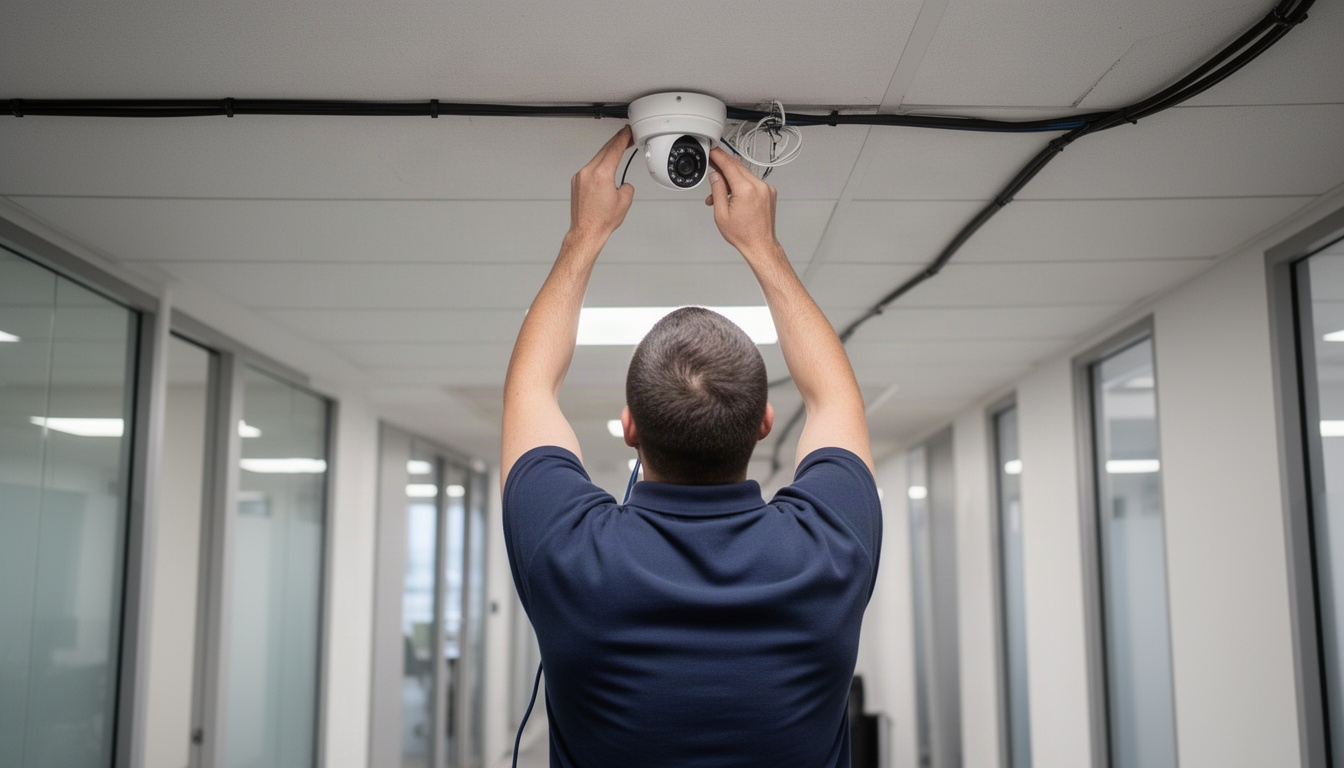
11 min read
Need it handled? Call (800) 988-6511
Cctv Surveillance Installation in Auburn, WA: ACD Telecommunications serves Auburn and the surrounding area. Call (800) 988-6511 for a free estimate.
TL;DR: CCTV surveillance installation in Auburn, WA runs $800–$1,400 for residential 4-camera systems and $2,500–$6,000+ for commercial 8-camera setups. Washington State requires a licensed low-voltage contractor (EL06 license) for hardwired installations. Auburn's 40+ inches of annual rainfall means outdoor cameras must meet IP66 or IP67 weather ratings. Most professional installations take 1–2 days for residential, 3–5 days for larger commercial projects.
What Does CCTV Surveillance Installation Cost in Auburn, WA?
The cost of a CCTV system in Auburn depends on camera count, resolution, and whether you're installing residential or commercial equipment. Here's what you'll typically encounter:
Residential systems (4 cameras, 1080p IP): $800–$1,400 installed Commercial systems (8 cameras, 1080p–4K): $2,500–$6,000+ installed
The breakdown is straightforward. Hardware costs range from $80–$400 per camera depending on resolution and housing type. Labor runs $75–$150 per hour for licensed Washington contractors, with most residential jobs taking 4–6 hours and commercial installations requiring 8–20+ hours depending on cabling complexity and network setup.
Here's a practical example: a 6-camera PoE (Power over Ethernet) IP system for an Auburn retail shop would cost roughly $1,200 in hardware plus $600 in labor (4 hours × $150/hr), totaling $1,800 installed. That includes camera mounting, network configuration, and basic remote access setup.
King County and Pierce County permit considerations: Auburn straddles both counties, and addresses west of Auburn Way South generally fall under King County jurisdiction while portions of south Auburn fall under Pierce County. However, the City of Auburn Building Division handles all electrical and low-voltage permits within city limits regardless of county. As noted by the Auburn's Permits, Licenses, & Inspections page, you'll need to apply for a permit through the city if you're running hardwired power to cameras – wireless systems may not require one, but it's worth confirming with the Building Division before starting work.
Key Takeaway: Budget $300–$600 per camera for a complete installed system in Auburn, including hardware, labor, and basic configuration. Wireless systems cost less upfront but may require battery replacement and offer less reliable connectivity in Auburn's rainy climate.
Which CCTV Camera Types Work Best for Auburn Properties?
Auburn's Pacific Northwest climate – with 40+ inches of rain annually and 150+ rainy days – shapes which cameras perform reliably. Here's how the main types compare:
| Camera Type | Best For | Weather Rating | Cost Per Unit | Remote Access |
|---|---|---|---|---|
| Bullet | Outdoor perimeter, parking lots | IP66–IP67 | $120–$300 | Yes (IP) |
| Dome | Indoor, covered areas, retail | IP54–IP66 | $100–$250 | Yes (IP) |
| PTZ (Pan/Tilt/Zoom) | Large commercial areas, parking structures | IP66–IP67 | $300–$800 | Yes (IP) |
| Turret | Flexible mounting, outdoor/indoor | IP66–IP67 | $150–$350 | Yes (IP) |
Weather resistance is non-negotiable here. Outdoor cameras in Auburn must carry at least an IP66 rating (protection against powerful water jets). For ground-level installations near drainage or direct spray zones, IP67 (temporary immersion protection) is the safer choice. This matters because our region's persistent drizzle and occasional heavy rain will degrade lower-rated equipment within months.
Resolution tiers affect both image quality and storage needs. A 1080p camera requires roughly 4 Mbps of bandwidth and generates about 40–50 GB of storage per camera per day at continuous recording. Jump to 4K, and you're looking at 8–12 Mbps per camera and 100+ GB daily per unit. For most Auburn small businesses, 1080p–2MP provides adequate detail for facial recognition and license plate capture without overwhelming your network or storage.
Wired (PoE) versus wireless is a practical choice in Auburn. PoE systems run data and power through a single Cat5e or Cat6 cable, simplifying installation and eliminating battery maintenance. Wireless systems are easier to install initially but struggle with interference in older commercial buildings and require regular battery checks – not ideal in our rainy climate where moisture can corrode connections.
How to Choose a CCTV Installer in Auburn, Washington
Finding a qualified installer matters more than price. Here's a 5-point vetting checklist:
- Washington State licensing: Verify the installer holds an EL06 (low-voltage specialty) or EL01 (master electrician) license through the Washington Department of Labor & Industries. Use the L&I License Lookup tool to confirm current status and bonding. Unlicensed work can void your homeowner or business insurance and trigger L&I fines.
- Bonding and insurance: Confirm they carry general liability insurance ($1M+ coverage) and a current surety bond. This protects you if equipment fails or the job isn't completed.
- Manufacturer certifications: Ask if they're certified installers for the camera brands they recommend. Hikvision, Axis, and Uniview certifications indicate genuine training and access to technical support.
- Local references: Request 2–3 Auburn-area references from similar projects (retail, office, warehouse). Call them and ask about post-install support and system reliability.
- Red flags to avoid:
- No written quote or vague pricing
- Subcontractors who aren't licensed or bonded
- No mention of post-install support or warranty
- Pressure to sign before you've reviewed the proposal
Ask every potential installer these questions before signing:
- What happens if a camera fails after installation?
- Do you provide remote access setup and training?
- What's your response time if the system goes down?
- Will you pull permits, or is that my responsibility?
Local Auburn installers typically respond faster to service calls and understand King/Pierce County permit processes better than national chains. (Wa.gov) That responsiveness matters when a camera fails during a break-in or you need urgent footage for law enforcement.
Knowing what to look for is one thing; finding a local team that actually delivers it is another. ACD Telecommunications is one serving Dublin, Pleasanton and Livermore — clear about what they do, upfront on pricing, and easy to reach before you commit to anything.
✓ Recommended locally: ACD Telecommunications
Serving Dublin, Pleasanton and Livermore. Call (800) 988-6511 or get in touch »
Step-by-Step: What Happens During a CCTV Installation in Auburn
Understanding the installation process sets realistic expectations and helps you prepare your property. Here's the typical flow:
1. Site survey (1–2 hours) The installer walks your property, identifies camera locations, checks network infrastructure, and measures cable runs. They'll note obstacles (roof pitch, conduit availability, electrical panel location) that affect labor time and cost.
2. System design Based on the survey, they'll propose a camera layout, NVR (Network Video Recorder) or DVR placement, and cabling plan. This is when you confirm resolution, storage duration, and remote access requirements.
3. Cabling and power For hardwired systems, they'll run Cat5e/Cat6 cable (PoE) or separate power and data lines depending on your setup. This is the most time-intensive phase, especially if running cable through walls or conduit.
4. Camera mounting Cameras are installed at agreed-upon heights and angles. Outdoor cameras are typically mounted 8–12 feet high to avoid tampering and capture faces at natural height.
5. NVR/DVR setup and configuration The recorder is installed, connected to your network, and configured with storage settings. For a 6-camera 1080p system recording 24/7, you'll need roughly 3–4 TB of storage for 30 days of footage.
6. Remote access configuration The installer sets up mobile app access, cloud backup (if desired), and user accounts. This is when they'll explain how to view footage on your phone or computer.
7. Testing and handoff All cameras are tested, footage quality is verified, and you receive login credentials, warranty documentation, and a brief training session.
Timeline expectations:
- Residential (4 cameras, PoE): 1 day
- Small commercial (8 cameras, mixed indoor/outdoor): 1–2 days
- Large commercial (16+ cameras, multiple buildings): 3–5 days
Network bandwidth reality check: Before installation, confirm your internet connection can handle the system. Eight 1080p cameras at 4 Mbps each = 32 Mbps upload bandwidth needed for continuous cloud backup. Most Auburn businesses have sufficient bandwidth, but older properties with legacy connections may need an upgrade.
Are There Local Regulations for CCTV Cameras in Auburn, WA?
Washington State imposes strict privacy and audio recording rules that many property owners overlook. Understanding these protects you from legal exposure.
RCW 9A.44.115 (Voyeurism statute): Cameras cannot record in locations where individuals have a reasonable expectation of privacy – bathrooms, changing areas, locker rooms, or any enclosed space where someone would expect privacy. Violating this is a Class C felony. For commercial properties, this means no cameras in restrooms, employee break rooms, or private offices without explicit consent.
RCW 9.73.030 (Washington Privacy Act – Audio Recording): Washington requires all-party consent for audio recording. If your CCTV system has audio capability, every person in the recorded area must consent to being recorded. Most security attorneys recommend disabling audio on CCTV systems entirely to avoid criminal exposure. Violating this is also a Class C felony, carrying up to 5 years imprisonment and $10,000 fines.
City of Auburn signage requirements: Commercial properties with visible cameras should post clear signage notifying visitors that recording is in progress. This is both a legal best practice and a deterrent to theft.
HOA considerations: If your Auburn property is in a planned community with a homeowners association, check your CC&Rs before installing exterior cameras. Many HOAs require architectural approval for external modifications, including camera mounting.
Data retention best practice: Most Auburn commercial properties retain 30 days of footage as a standard. Some industries (banking, gaming, healthcare) may have longer retention requirements under state or federal law. Confirm your industry's specific obligations before sizing your NVR storage.
CCTV vs. IP Camera Systems: Which Should Auburn Businesses Choose?
The terms are often used interchangeably, but they represent different technology generations. Here's the practical difference:
| Feature | Analog CCTV | IP/NVR System |
|---|---|---|
| Resolution | 720p–1080p max (AHD/TVI) | 1080p–8K (IP) |
| Cable | Coax + separate power | Cat5e/Cat6 (PoE) |
| Remote access | Limited or none | Full mobile/web access |
| Scalability | Hard to expand | Add cameras easily |
| Initial cost | $400–$800 per camera | $150–$400 per camera |
| Storage | DVR (limited) | NVR (scalable) |
| Image quality | Decent for basic monitoring | Excellent for detail/analytics |
Analog CCTV uses coaxial cable and a DVR to record footage locally. It's cheaper upfront and works well for simple setups, but you're limited to 1080p resolution and can't easily view footage remotely without extra equipment.
IP/NVR systems send video over your network to a Network Video Recorder. They offer superior image quality, remote access via smartphone, and easy scalability – add a camera without rewiring the whole system.
Hybrid systems bridge the gap: you can connect existing analog cameras to an IP-based NVR using converters, letting you upgrade gradually without replacing everything at once. This works well for Auburn businesses with legacy analog infrastructure.
Recommendation framework:
- Under 8 cameras, new install: Go IP/NVR. The cost difference is minimal, and remote access is invaluable.
- Existing analog system: Consider a hybrid upgrade. Replace cameras as they fail, migrate to IP NVR.
- Large campus (16+ cameras): IP with managed PoE switches. Easier to maintain and scale.
Finding Reliable CCTV Installation in Auburn, Washington
When you're ready to move forward, the installer you choose shapes your system's reliability and your experience. Here's what to look for in an Auburn-area provider.
A qualified local installer should hold current Washington L&I licensing, carry bonding and liability insurance, and provide written quotes with transparent labor rates and equipment costs. They should be willing to pull permits through the City of Auburn Building Division and explain the process upfront. Ask for references from similar Auburn projects – retail shops, warehouses, or offices – and follow up with those references directly.
ACD Telecommunications, based in the region, offers CCTV surveillance system design and installation for Auburn businesses. They handle the full process: site survey, system design, hardwired installation with proper permitting, NVR configuration, and post-install support. Their team is familiar with Auburn's King/Pierce County jurisdiction split and Washington's strict audio recording laws, which matters when you're setting up a compliant system. They can walk you through the vetting process and answer technical questions about bandwidth, storage, and remote access before you commit.
When comparing quotes, don't just look at price. Confirm what's included: camera hardware, cabling, labor, NVR, remote access setup, and post-install support. A $500 difference in total cost might reflect cheaper cameras or incomplete configuration – ask for specifics.
Recommended Business Phone Systems: ACD Telecommunications
If you'd rather skip the search, ACD Telecommunications serves Dublin, Pleasanton and Livermore and handles this end to end — with clear pricing and a straight answer on timing before you commit.
Frequently Asked Questions: CCTV Installation Auburn WA
How much does it cost to install a CCTV system in Auburn, WA?
Direct Answer: Residential 4-camera systems typically cost $800–$1,400 installed; commercial 8-camera systems run $2,500–$6,000+. Costs depend on camera resolution, wiring complexity, and whether you need permits.
Most Auburn installations break down to $300–$600 per camera all-in (hardware, labor, configuration). A 6-camera PoE system for a small retail shop usually lands around $1,800–$2,200 total. Request written quotes from at least two installers to compare pricing and what's included.
Do I need a permit to install security cameras in Auburn, Washington?
Direct Answer: Yes, if you're running hardwired power to cameras. The City of Auburn Building Division requires an electrical permit for any hardwired low-voltage installation.
Wireless battery-powered cameras may not require a permit, but confirm with the Building Division before starting. Permits typically cost $50–$150 and take 1–2 weeks to process. A licensed installer will handle the permit application as part of the job.
How long does a professional CCTV installation take in Auburn?
Direct Answer: Residential installations (4 cameras) typically take 1 day; small commercial (8 cameras) takes 1–2 days; large commercial (16+ cameras) takes 3–5 days.
The timeline depends on cable runs, network complexity, and whether the installer needs to pull permits. Most Auburn jobs are completed within 2 business days once permits are approved.
What is the difference between CCTV and IP camera systems for businesses?
Direct Answer: Analog CCTV is older technology limited to 720p–1080p resolution and local recording only. IP camera systems offer higher resolution (up to 8K), remote mobile access, and easier scalability.
For Auburn businesses, IP/NVR systems are the modern standard. They cost slightly more upfront but offer superior image quality, remote viewing, and easier expansion. If you have an existing analog system, a hybrid upgrade lets you migrate gradually.
Can I monitor my Auburn property cameras remotely from my phone?
Direct Answer: Yes, if you install an IP/NVR system. The installer will set up mobile app access so you can view live footage and playback from anywhere with internet.
Analog CCTV systems don't offer remote access without additional equipment. Most IP systems support iOS and Android apps and can send alerts to your phone if motion is detected.
How many cameras do I need for a small Auburn business?
Direct Answer: Most small retail or office spaces need 4–6 cameras: one at the entrance, one at the register or main work area, one covering the back room, and one or two covering the parking lot or exterior.
Walk your space and identify high-value areas (cash, inventory, entry points) and blind spots. A professional installer can recommend specific placement during a site survey.
Are outdoor security cameras weatherproof enough for Auburn's rainy climate?
Direct Answer: Yes, if they meet IP66 or IP67 ratings. Auburn receives 40+ inches of rain annually, so outdoor cameras must be rated for powerful water jets and moisture.
Avoid cameras rated below IP66. For ground-level installations near drainage or direct spray, IP67 (temporary immersion protection) is safer. Check the camera's specifications before purchase.
Next Steps: Get Your Auburn CCTV System Installed
You now understand the costs, regulations, and installation process for CCTV surveillance in Auburn. The next step is getting a professional assessment of your property and a detailed quote.
Contact a licensed Auburn installer to schedule a free site survey. They'll walk your property, identify camera locations, assess your network, and provide a written quote with labor and equipment costs broken out. Verify their Washington L&I license, ask for local references, and confirm they'll handle permits and post-install support.
If you're ready to move forward, reach out to ACD Telecommunications or another qualified local provider. A professional installation takes the guesswork out of system design and ensures your cameras are positioned, configured, and legally compliant from day one.
Ready to Get Started?
For personalized guidance, visit ACD Telecommunications to learn how we can help.
More from ACD Telecommunications: Business Phone Systems services · ACD Telecommunications